


Permacrisis and the Policy Continuum in the UK: Deepening Inequalities before, during and after COVID-19

Permacrisis and the Policy Continuum in the UK: Deepening Inequalities before, during and after COVID-19
dirigé par Anémone Kober-Smith et Anne Beauvallet (Routledge, 2026)
RESUME
Cet ouvrage rédigé en anglais s’intéresse à la permacrise que traverse le Royaume-Uni – politiques d’austérité, Brexit, inflation et hausse du coût de la vie – à travers le prisme des mesures prises pour lutter contre la pandémie de COVID-19 et de la continuité des politiques publiques existantes.
Il démontre que ce continuum ne peut être considéré comme une simple tentative de résoudre une série de problèmes sociaux et économiques, mais qu’il contribue également à forger une crise permanente sui generis. Il conclut que les réponses politiques apportées par le gouvernement avant, pendant et après la pandémie ont présenté diverses lacunes en matière de gouvernance, de leadership et d’exécution, contribuant ainsi fortement à la permacrise britannique. L’ouvrage repose sur une évaluation des politiques publiques dans des domaines clés, dont la santé mentale, les soins et l’éducation, afin d’explorer l’impact de la pandémie sur les populations vulnérables et les inégalités qui sont enracinées depuis longtemps au Royaume-Uni.
Cet ouvrage présente un intérêt particulier pour les chercheurs et les étudiants en politique britannique, en études politiques et, plus largement, en sociologie et en politique sociale.
Table des matières/Table of content:
-Introduction. Anémone Kober-Smith and Anne Beauvallet
Part I: The impact of COVID-19 on UK society and vulnerable groups
Chapter 1. The COVID-19 pandemic and the North-South Divide in England. Mark Bailoni
Chapter 2. The joint effect of deprivation during the COVID-19 pandemic in England: how did contextual and individual experiences affect health-related behaviours? Alexandra Sheridan, Laura Silva and Franco Bonomi Bezzo
Chapter 3. Caring during the COVID-19 crisis: the experiences of unpaid carers of older people with dementia in Wales through a well-being analysis. Maria Cheshire-Allen
Chapter 4. The COVID-19 pandemic as a compounding factor to the poor mental health of young people in Northern Ireland. Fabrice Mourlon
Part II: Policy responses during the crisis and in its immediate aftermath: the features of crisis management.
Chapter 5. Support services for young fathers in England before and during COVID-19 times. Chloë Cottrell
Chapter 6. Free school meals in England during the COVID-19 pandemic: ‘no child should go hungry’. Anne Beauvallet
Chapter 7. The COVID-19 pandemic in England and Scotland: a critical juncture in homelessness policy? David Fée
Part III: Policy temporalities beyond the immediate crisis.
Chapter 8. Health inequalities, structural racism, and the COVID-19 pandemic: the case of racially and ethnic minoritised groups in England. Sharon Baptiste
Chapter 9. The ‘hostile environment’ logic and the UK’s health crisis during the pandemic and beyond. Louise Dalingwater, Elisabeth Mangrio, Michael Strange, and Slobodan Zdravkovic
Chapter 10. Tackling inequalities in English schools in the time of COVID-19: What lessons can be learnt? Françoise Granoulhac
Chapter 11. Rebuilding the education system in England post-COVID-19: tension points and possibilities. Gemma Moss
Chapter 12. Understanding COVID-19 and its context of existing health inequalities in the UK: the importance of a conceptual frame for developing coherent policy and action. David Baruffati and Mhairi Mackenzie
Conclusion. Anne Beauvallet and Anémone Kober-Smith<
Dernières publications

Gaza, les mots pour (ne pas) le dire
Gaza, les mots pour (ne pas) le direOuvrage collectif coordonné par Hadjira Medane et Marie-Anne Paveau (annonce en anglais, portugais…
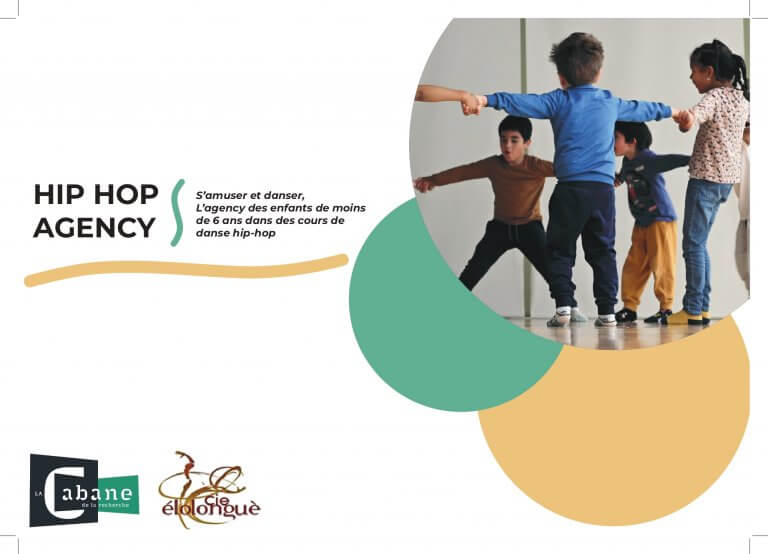
Hip Hop Agency. S’amuser et danser,L’agency des enfants de moins de 6 ans dans des cours de danse hip-hop.
Hip Hop Agency. S’amuser et danser, L’agency des enfants de moins de 6 ans dans des cours de danse hip-hopLoréna…
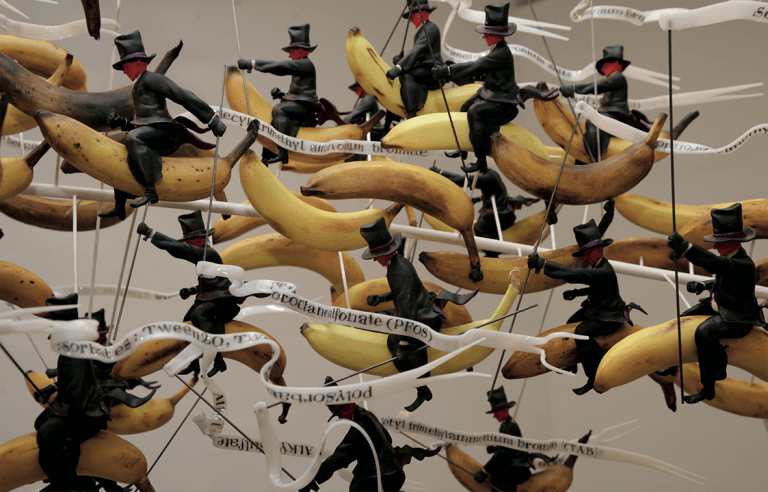
Itinéraire. LTC, parution “Le manifeste s’éclate”
Écritures de Le manifeste s’éclate : Révolutions contemporaines du manifeste artistique et littéraire, entre théorie et pratique (no 2024-2)l’urgence à…
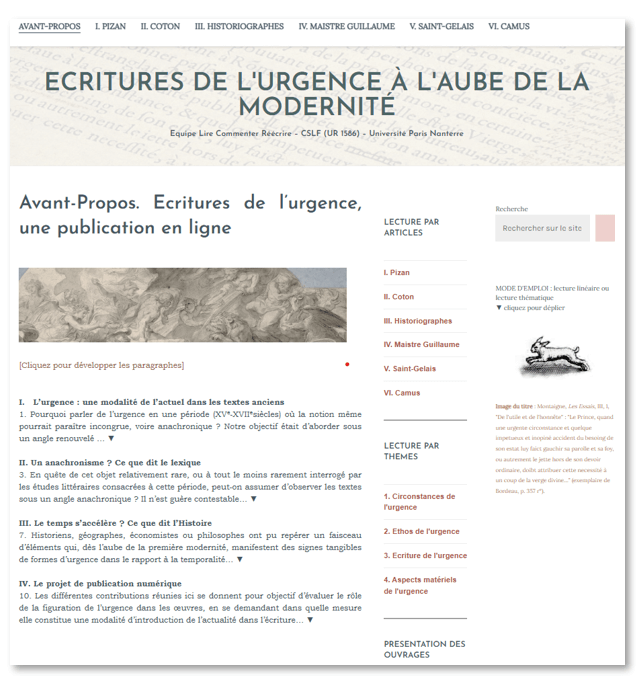
Écritures de l’urgence à l’aube de la modernité
Écritures de l’urgence à l’aube de la modernitéÉquipe Lire Commenter RéécrireCoordinateur·ices : Mathilde Bernard, Mathieu de la Gorce, Flavie Kerautret,…
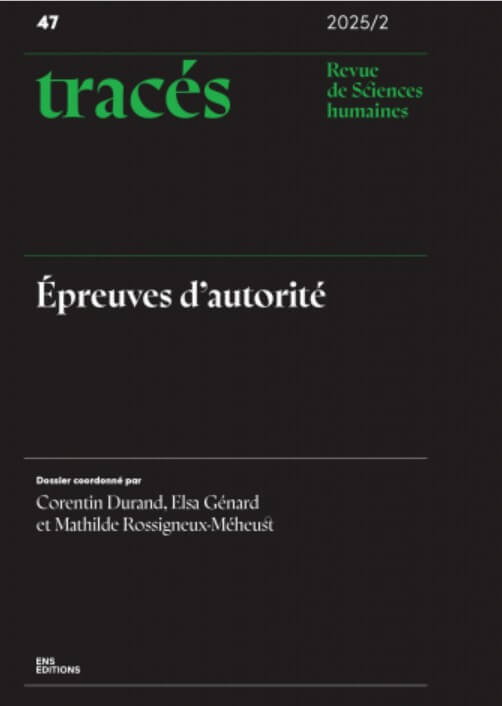
Revue Tracés. Revue de sciences humaines. T47 « Epreuves d’autorité »
Revue Tracés. Revue de sciences humaines. T47 « Epreuves d’autorité » RESUME De quoi sont faites les relations entre employés et patrons,…
Idéologie et imaginaire linguistiques en Espagne (1492-1625)
Idéologie et imaginaire linguistiques en Espagne (1492-1625)Marie-Eglantine Lescasse De 1595 à 1625 paraissent coup sur coup en Espagne un ensemble…